

By Sorabh Behal
The Indian unscripted market has long been anchored in talent-led reality formats - singing, dancing, cooking, and general knowledge. But the rise of OTT has also strengthened the social reality sub-genre, which for years was effectively defined by a single benchmark: Bigg Boss. But streaming, alongside the parallel growth of the influencer economy, has expanded the creative canvas and encouraged newer experiments. One of the clearest successes from this wave is The 50, on JioHotstar and Colors.
The week-on-week viewership of The 50 on JioHotstar, as reported by Ormax StreamView (OSV), is shown in the chart below. These figures estimate the number of Indians who watched the show for at least 30 minutes in the corresponding week.
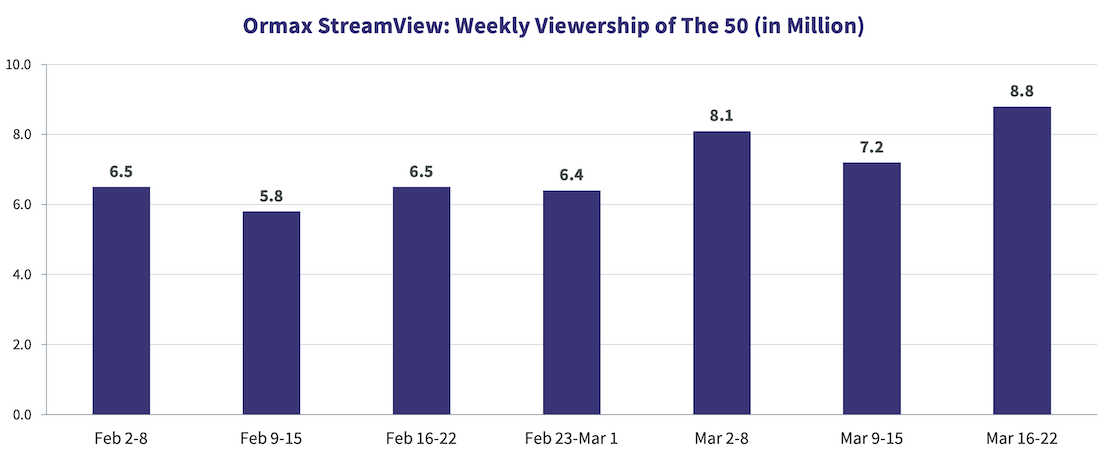
Across its seven-week run, The 50 amassed an unduplicated audience of more than 13 million, and consistently ranked as the second most-watched property on streaming in India, behind only the ICC Men’s T20 Cricket World Cup.
Traditionally, social reality shows are powered by voyeurism: the audience’s curiosity about how known (or semi-known) personalities behave when placed together in a controlled environment. In many formats, this curiosity is amplified through emotionally charged storytelling, where conflict and dramatic arcs dominate screen time. While this can drive engagement, it also risks repetition and fatigue - one reason why social reality shows beyond Bigg Boss have had an uneven strike rate.
So what did The 50 do differently, and what does its success tell us about the future of Hindi social reality on OTT?
Reframing voyeurism through competition
The 50 leans into the voyeuristic core of the genre by placing 50 personalities under one roof. But it recalibrates what drives the narrative. Instead of allowing interpersonal drama to become the primary engine of progression, the show anchors storytelling in structured “tasks”.
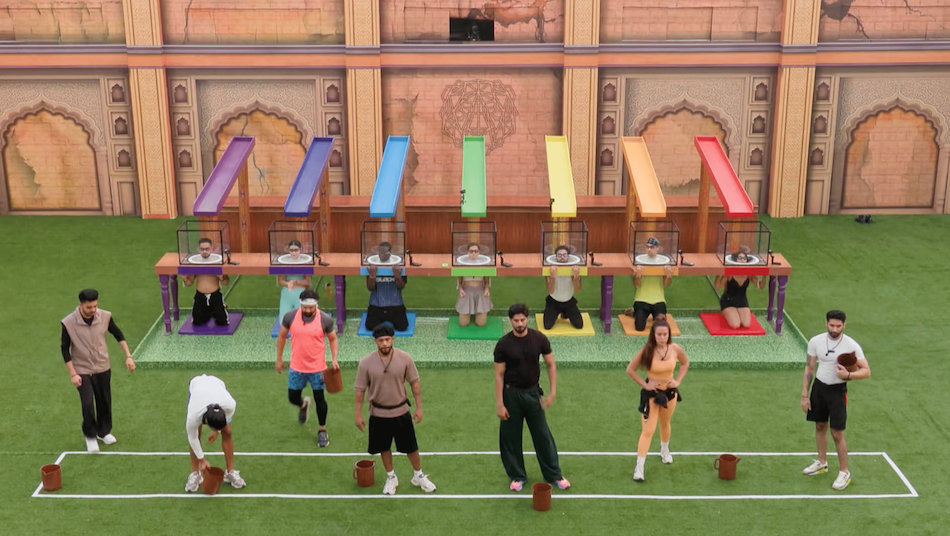
Narrative momentum is shaped by competitive challenges with a clear objective: identify one eventual winner. This framework naturally creates space for strategic alignment, alliance-building, performance under pressure, and survival instinct to take centre stage. Conflicts, arguments, and emotional exchanges do occur, but they emerge as by-products of competitive pressure, and not as prolonged spectacle. The result is intensity without sustained negativity, and a competitive voyeuristic experience that feels purposeful rather than emotionally draining.
Innovative task design and premium execution
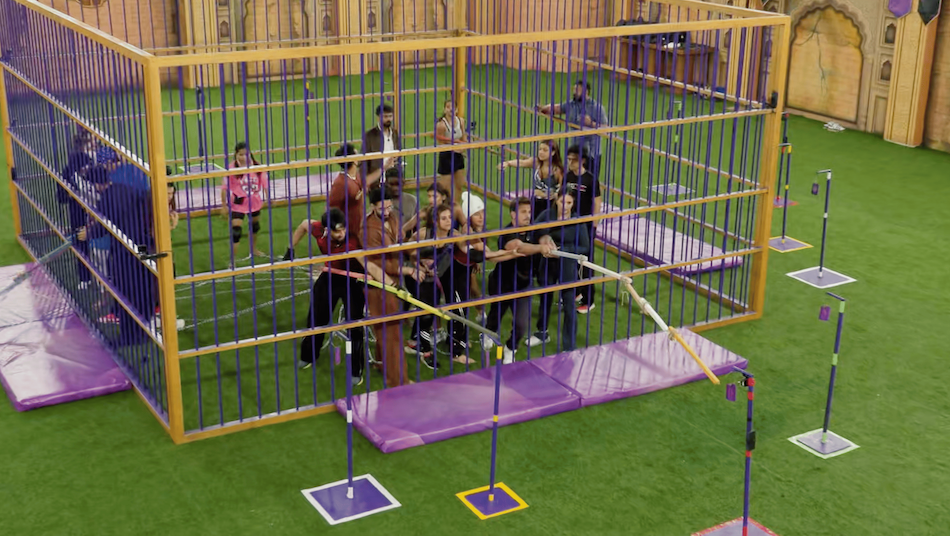
Tasks in The 50 don’t just steer the story; they also stand out for novelty and craft. The show departs from familiar templates by introducing original formats and unexpected rule variations, making each task, and therefore each episode, feel distinct.
The tasks are also multi-dimensional. They test planning, coordination, strategic alignment, intellect, physical stamina, and real-time decision-making. This breadth prevents the competition from being dominated by a single skill set, and allows different personalities to shine across contexts.
Scale and execution further elevate the experience. Grand production design, expansive layouts, and precise staging add weight to the competition and enrich the visual language. Viewers are drawn not only to spectacle, but to the process - watching contestants think, calculate, and execute under pressure.
Strategic engagement and competitive credibility
At its core, The 50 is a show about survival. With only one winner, contestants are constantly forming alliances, reassessing loyalties, taking calculated risks, and repositioning themselves within the group. The tension comes from anticipating how power will shift after each challenge.
Crucially, the show makes this strategic layer legible. Bytes between tasks and eliminations reveal contestants’ plans, doubts, and calculations, giving viewers access to intent, not just behaviour. This builds a different kind of involvement: the audience tracks strategy as much as personality.
The absence of audience voting strengthens credibility further. Eliminations are determined within the game, making survival dependent on performance, positioning, alliances, and timing, not external fan mobilisation. This increases unpredictability and reinforces the merit-driven nature of progression. The early exits of well-known contestants (such as Urvashi Dholakia and Karan Patel), alongside the rise of lesser-known participants through strategic play, makes the ecosystem feel internally consistent and earned.
Scale, diversity, and narrative breadth
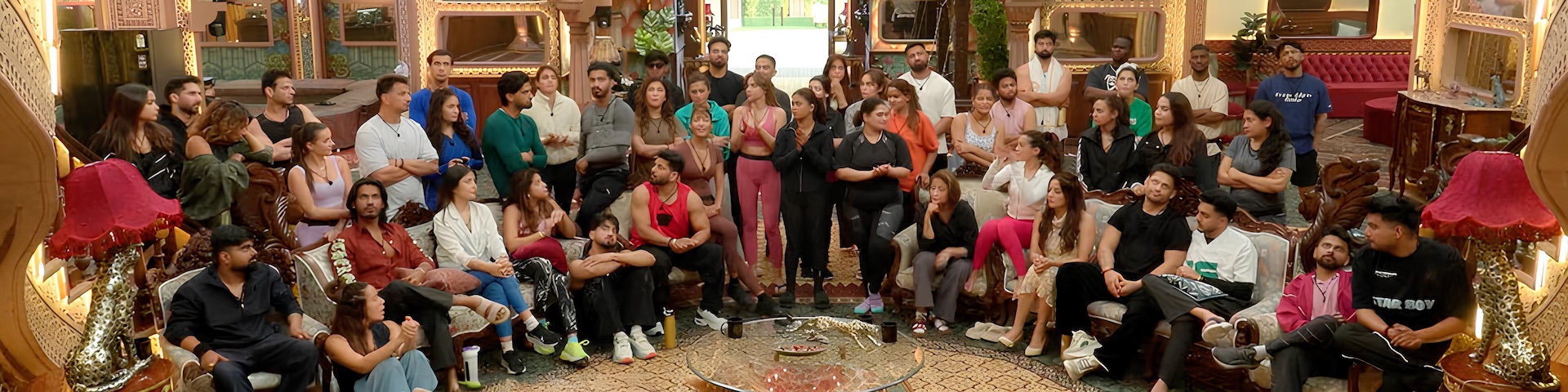
A defining strength of The 50 is its scale. With 50 contestants, the show creates a dynamic ecosystem from the outset, enabling multiple storylines to run in parallel and reducing reliance on a handful of personalities to drive engagement. Casting spans television, OTT, social media, music, and alumni from other reality shows, broadening audience entry points by offering different kinds of familiarity. The mix also creates tonal and behavioural variety: some contestants (such as Archana Gautam, Kaka and Maxtern) bring humour and spontaneity; others (such as Prince Narula and Rajat Dalal) contribute calculated strategy; some (such as Shiv Thakare and Mr. Faisu) excel at execution under pressure; a few (such as Urvashi Dholakia) embody underdog resilience. This variety helps the show avoid collapsing into one dominant mood or a single recurring conflict loop.
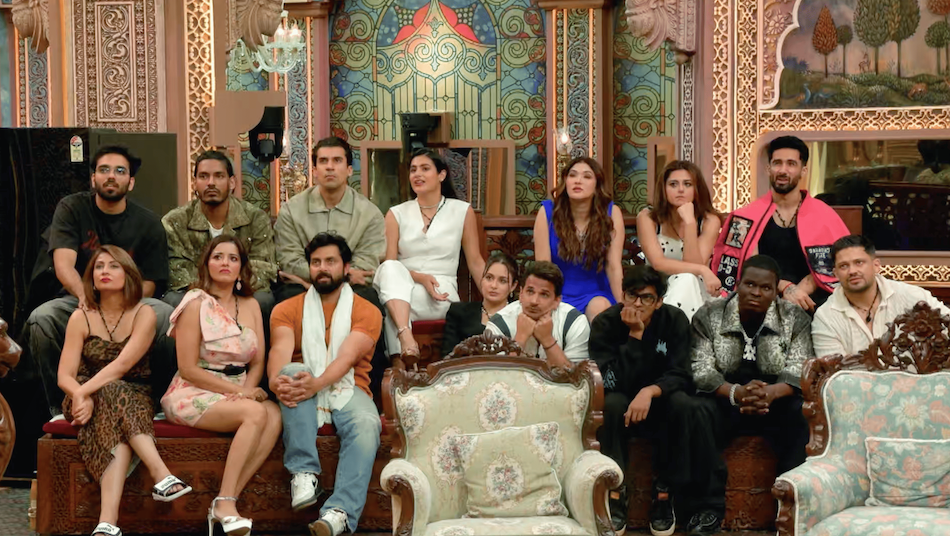
The format also breaks from the star-hosted structure common in Indian reality programming. Without a conventional celebrity anchor, the show feels more game-centric than personality-centric, offering a clear departure from the clutter.
Finally, the stylised presence of characters such as the Lion and the Rabbit adds a layer of theatre and lightness without overshadowing the competition. These elements provide tonal balance while keeping the core stakes intact.
Bingeable, snackable, and easy to enter
The 50 aligns well with OTT viewing behaviour in pace and structure. Each episode contains a defined task arc (setup, build-up, and outcome), creating short satisfaction loops while still advancing the larger competition. This makes the show bingeable, but also suited to “snackable” viewing.
Just as importantly, it’s easy to enter mid-season. Because the narrative is driven by tasks rather than dense backstory or episodic continuity, viewers who have missed episodes can quickly understand the stakes without extensive context. The format is designed for modern streaming attention patterns, without diluting the competitive core.
Conclusion: social reality, recalibrated for OTT
The success of The 50 on streaming comes from retaining the genre’s proven voyeuristic appeal while structurally reorienting it around competition, strategy, and merit-driven progression. Innovative task design, competitive credibility, diverse casting, tonal balance, and streaming-friendly pacing combine to deliver a format that feels familiar yet evolved. Most importantly, The 50 doesn’t come across as a Bigg Boss derivative - a test many social reality experiments in India have struggled to pass.

K-Dramas in India: The growth story in numbers
Nine key data points from The Ormax OTT Audience Report: 2026 and Ormax StreamView, that showcase the growing consumption of K-Dramas in India

The Ormax OTT Audience Report: 2026
The latest edition of The Ormax OTT Audience Report sizes India’s digital video universe at 664.9 million users. The CTV universe has grown by a staggering 60% in a single year, to 206.9 million

The Connected TV Era: India's New Prime Time
A new report by WPP Media and The Trade Desk, in partnership with Ormax Media, explores India’s rapidly-evolving CTV landscape, and what that means for marketers today
Subscribe to stay updated with our latest insights
© 2026 Ormax Media Pvt. Ltd. All Rights Reserved.
Ormax Media Pvt. Ltd.
402, Signature,
Captain Suresh Samant Marg,
Andheri West, Mumbai 400053
Phone: +91 9324939911
Get to know us


We use cookies to improve your experience on this site. To find out more, read our Privacy Policy